Glossary
Linear Economy
Definition
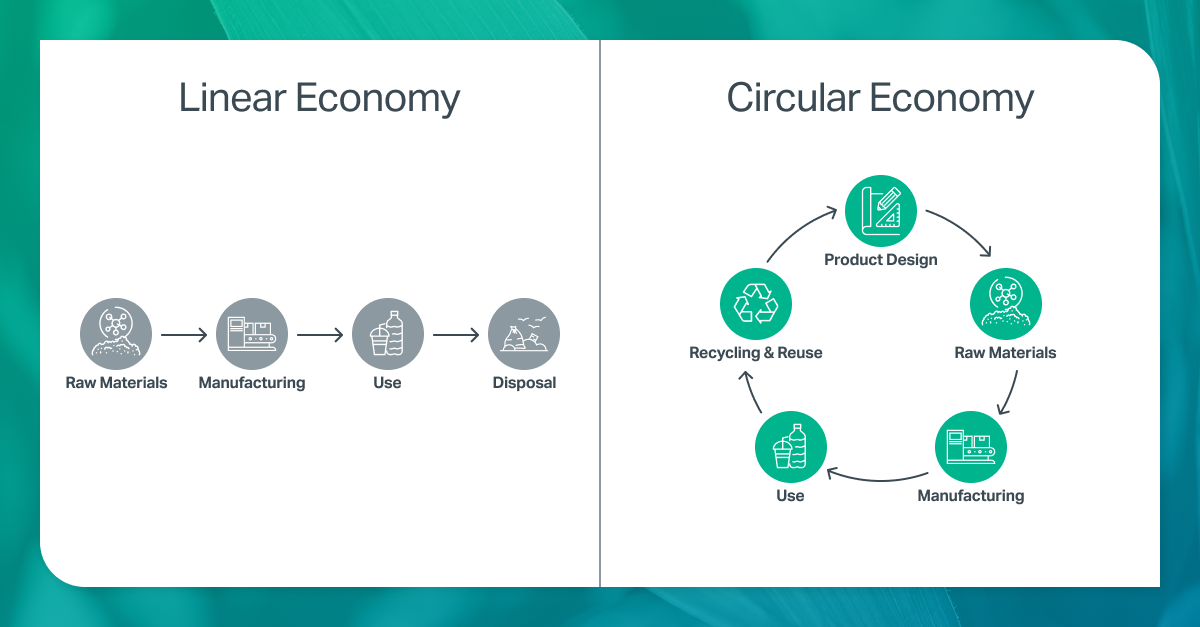
A linear economy traditionally follows the ‘take-make-dispose’ model of production and consumption. In this system, raw materials are collected, transformed into products, used by consumers and finally discarded as waste.
Value in a linear economy is created primarily through high production and sales volume, with limited emphasis on resource efficiency, product longevity or waste recovery.
Context
The linear economy has been the foundation of global manufacturing and consumption patterns for over a century. However, this model’s dependence on finite natural resources and single-use production cycles has become increasingly unsustainable as population growth, consumption and waste generation accelerate.
In the plastics industry, the linear economy model contributes to high levels of waste and environmental pollution, as most plastic products are designed for single use and disposed of rather than recovered or reused. The shift away from the traditional ‘take-make-dispose’ mindset aligns with global sustainability trends, regulatory changes and customer demand for circular materials that support long-term environmental resilience.
Related Content
Sustainability at M. Holland
Learn more