Glossary
Circular Economy
Definition
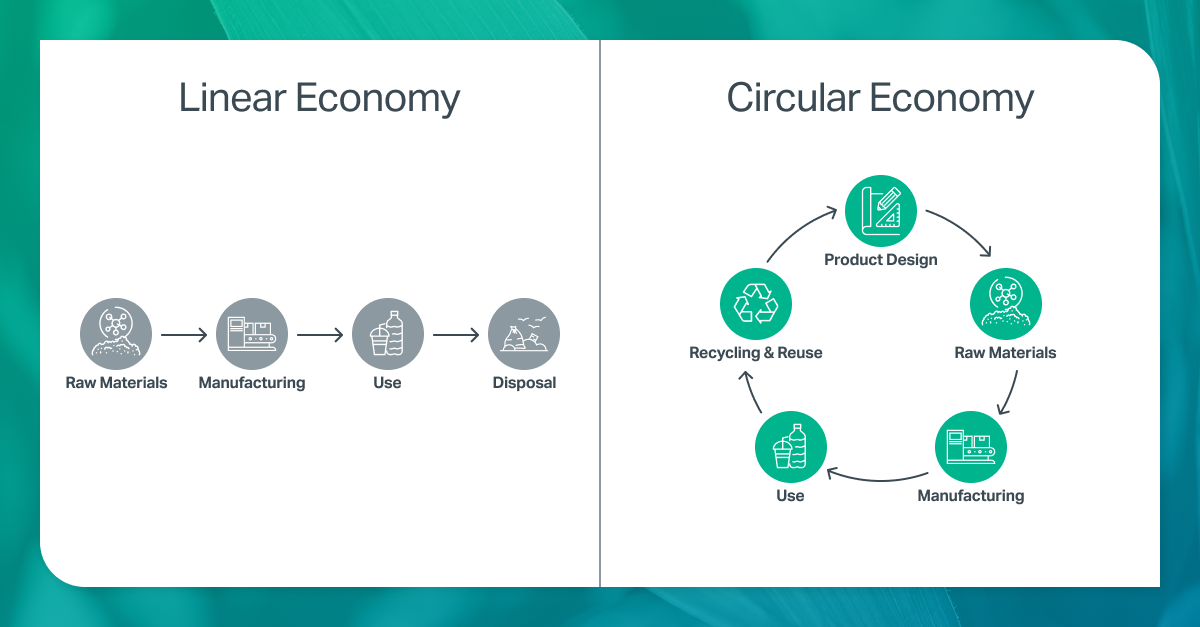
A circular economy is a systemic approach to economic development designed to benefit businesses, society and the environment. In contrast to the ‘take-make-waste’ linear model, a circular economy is regenerative by design and aims to gradually decouple growth from the consumption of finite resources.
In a circular economy, materials are kept in use for as long as possible through reuse, repair, remanufacturing and recycling, minimizing waste and reducing the need for virgin raw materials.
Context
The circular economy model is reshaping how the plastics and materials sectors think about production, consumption and waste. Rather than viewing plastic as a disposable product, the circular model treats it as a valuable resource that should circulate within the economy rather than end up in landfills or the environment.
Embracing a circular economy requires collaboration across the value chain from material suppliers, manufacturers, recyclers and consumers. It also relies on continuous improvement in product design for recyclability, collection infrastructure and recycling technology.